

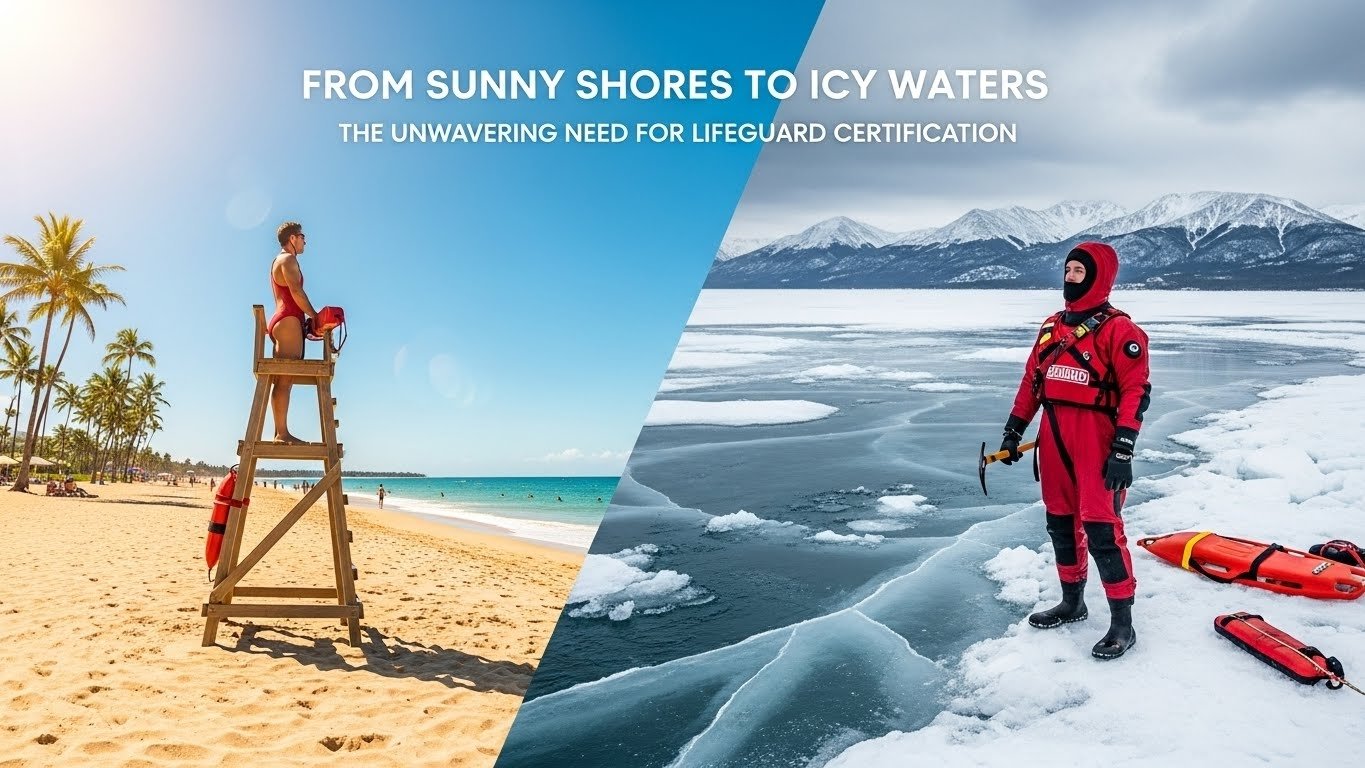
Our shared consciousness burns the classic image of a lifeguard: a sun-bronzed figure in a red swimsuit wandering the sandy beaches of a summer beach, eyes always scanning the tumbling waves. Shows like Baywatch glorified this role, making it a symbol of summertime, sunshine, and security in our society. Still, the demand for careful water safety does not just stop over as the seasons change and the temperatures drop.
It changes from the crashing waves of summer to the deceptive quiet of inside pools, icy lakes, and winter resort attractions. Ensuring that protectors are always on duty regardless of the weather, the safety attitude embodied in a demanding lifeguard certification remains a year-round priority.
More Than a Red Swimsuit: The Summer Standard
The first defense against underwater disaster has been the summer lifeguard for decades. Their attendance at water parks, community pools, and beaches nationwide is a comforting constant. The part, though, is significantly misconstrued if viewed only as a summer job for fit teenagers. Built on strong training, fast judgment, and physical ability, the position is backed up by an official lifeguard certification.
This credential denotes that an individual has attained expertise in a crucial set of abilities; it is not merely a participation trophy. From basic assists for weary swimmers to complicated extractions of passive victims from the water, candidates in lifeguard courses perfect their rescue skills. Because a few seconds can mean life and death, they work many hours to improve their swimming endurance and speed. Important here, these courses stress first aid, use of an automated external defibrillator (AED), and cardiopulmonary resuscitation (CPR).
The Seasonal Change: Why Water Safety is Always Necessary
Though the public’s attitude toward water changes as autumn leaves fall and winter frost settles in, the dangers remain. They just change. Though the community pool could shut its doors, indoor water facilities become busy centers of activity. Before school, swim teams rehearse; water aerobics classes for the elderly are in full swing; families rush to indoor water parks to flee the cold. These settings provide particular difficulties: glossy decks, often a greater density of younger children and senior adults (both of whom are at greater risk), and echoing noise that could obscure calls for aid.
Beyond the regulated settings of indoor pools, winter brings forth a plethora of fresh and sometimes more serious aquatic hazards. Children and unready adults find icy lakes and ponds extremely enticing. With the crack of thin ice, the thrill of skating on an ostensibly robust surface can swiftly turn tragic. A fall into cold water causes cold water shock, which causes hyperventilation, gasping, and fast muscular control—hence, self-rescue becomes almost impossible.
The Heart of the Craft: What Lifeguard Lessons Really Impart
One must go beyond the physical act of rescue and into the psychological and cognitive heart of the training to grasp the year-round significance of the lifeguard. At their heart, lifeguard courses are lessons in proactive vigilance and decision-making under intense duress. The most valuable ability a lifeguard develops is not how to quickly swim but rather how to scan, evaluate, and prevent.
Proper surveillance is a science. Trainees are taught organized scanning techniques to make sure no area of their defense zone is missed. They are trained to recognize not just the overt indications of a person in anguish, such as waving and calling, but also the more subdued signs: the wide eyes of a frightened swimmer vertical in the water unable to move, the silent struggle of a child slipped below the surface, or the erratic actions of someone having a medical event such a heart attack or seizure.
This proactive attitude turns a lifeguard from a reactive rescuer into a guardian of safety. They uphold norms to reduce risk—preventing running on moist decks, discouraging breath-holding competitions, and guaranteeing that less able swimmers stay in suitable depths—not to be autocratic. Much of their work is this steady, invisible prevention, which is as crucial in a warm indoor natatorium in January as it is on a bustling beach in July.
The Path to Certification: A Difficult and Responsible Trip
Designed to weed out people not completely dedicated to the responsibility, the path toward achieving that desired certification is a difficult one. Prospective lifeguards must first pass required swim exams, which usually include a timed 300-yard swim, a two-minute treading water session utilizing just the legs, and a tough brick test—retrieving a heavy object from the bottom of the pool. These simulations of the physical requirements of a true rescue are not random.
Once past the prerequisites, the real work starts in a multi-day lifeguard session. The curriculum here combines practical, in-water experience with intellectual study. Students investigate emergency response plans, victim identification, and water rescue techniques. Then they practice these talents tirelessly. They acquire knowledge on how to approach a frightened victim who may claw at them in panic, use rescue tubes and buoys efficiently, and carry out a secure extraction for someone with a suspected spinal injury.
A Culture of Consistent Safety
The move from summer beaches to winter watch is fundamentally a change in location rather than a change in career. The central purpose stays the same. On the same principles as the one keeping watch over the summer ocean break, the person who closely monitors a lap pool during a winter swim meet works. Preparedness is valued in both; therefore, groups like the American Lifeguard Association help to promote this culture of ongoing safety by offering affordable, high-standard lifeguard courses year-round.
Neither the season, the uniform, nor even the body of water defines the lifeguard’s spirit. It is characterized by a dedication to life preservation, a condition of continual readiness, and the expert knowledge acquired via demanding training. Our society’s duty is to understand that this need is constant. We have to value these guardians, urge fresh candidates to seek lifeguard certification, and realize that the security they provide is an ongoing, constant service, as critical in the silent freeze of winter as it is in the vivid heat of summer. The watch never ends; it just changes.