


The seven school games discussed in this article are designed to boost memory and enhance listening skills in students through interactive and engaging activities. Each game combines fun with information retention and improves classroom participation.
What if school games became a powerful tool for strengthening focus and attention? Strong memory and listening skills are the foundation of successful learning. In school environments, students constantly receive verbal instructions and discussions that require focused attention and accurate recall. When listening skills are underdeveloped, even bright students may have difficulty following directions and retaining information.
The school games reduce classroom pressure and support inclusive learning for students of different abilities. When teachers use fun school games with clear objectives, students practise essential cognitive skills in a relaxed environment. This approach helps them retain information and stay attentive.
This article showcases the seven best school games that enhance memory and listening skills, with support from The Academic Papers UK, a top assignment writing service. Keep reading for the details.
Core Outcomes of The Article:
- School games enhance students’ memory and listening skills by making the learning process an exciting activity.
- Fun classroom games for students improve focus, help them follow instructions, and retain information, making them more effective.
- School educational games help in recalling skills, besides consolidating academic concepts.
- Rainy day indoor school games are useful in ensuring that students stay mentally active when they do not have any outdoor games.
- Primary school outdoor playground games are good in building listening skills by teamwork and learning by moving.
Learning becomes more effective when students actively participate rather than just listen. The following school games demonstrate how play can boost memory and improve listening skills in an enjoyable and meaningful way.
1. Simon Says
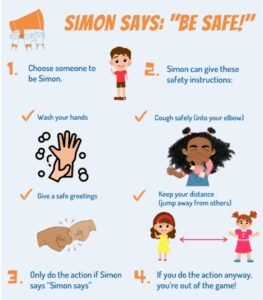
Simon Says is a classic classroom game in which students listen carefully to instructions and act only when the phrase “Simon says” is spoken first. For example, “Simon says touch your head” needs an action, while “Touch your toes” is a phrase that should be ignored.
The real challenge lies in choosing a relevant command while avoiding impulsive responses. Teachers can gradually increase the level of complexity of this game by adding multi-step actions. For example, “Simon says clap twice and turn around.” This kind of variation stresses the students to hold brief information in the memory while monitoring the accuracy of the game.
Cognitive Skills and Research Support
Cognitive skills and research support the claim that school games primarily develop selective listening and attention control. Students should learn to differentiate between essential and irrelevant verbal cues. This game is directly linked to the classroom learning process.
An NIH study found that school games require inhibitory control to significantly improve executive control in children. The Simon Says school game trains and encourages the skills of pausing, processing, and giving accurate responses in student behaviour.
2. Follow the Instructions
In the follow-the-instruction school game, the teacher verbally delivers the three to five logical instructions without any repetition. For example, “Take a pencil, draw a square on the page, write your name inside the square, and underline it.” Students must complete each step in the correct order and with the proper organisation. In quantitative data analysis, school games provide high-velocity data generators.
Without written support, students rely entirely on their listening skills and short-term memory. You can make this school game more challenging by increasing the number of steps.

Cognitive Skills and Research Support
This school game builds sequential accuracy for listening and working memory. Students can practice holding multiple kinds of information and processing them in an organised way. Research from APA PsycNet shows that the capacity of working memory strongly predicts academic performance, especially in reading and mathematics subjects.
The school games stimulate the instruction of a real classroom, such as the direction of an exam or the procedure of a lab. The school game Follow the Instructions also helps the students to improve their comprehension and gain confidence in following verbal guidance.
3. Sound Identification Game
The Sound Identification school game comprises playing or creating everyday sounds behind a screen or out of sight. For example, tearing the paper, tapping a desk, or pouring water. Students should listen carefully and identify the source of sound without the help of any visual clues.
Teachers can ask follow-up questions, such as whether the sound was loud or slow, to deepen the awareness of auditory. The school game works particularly well in the mechanism of primary education.

Cognitive Skills and Research Support
The school game strengthens auditory discrimination and sensory awareness, which are essential for language and phonemic awareness development. A ResearchGate study indicates that children who engage in auditory discrimination activities show improved listening and speech processing. By isolating the sound from visual input, students may sharpen their ability to interpret auditory information and support accurate listening.
4. Telephone Game (Whisper Down the Lane)
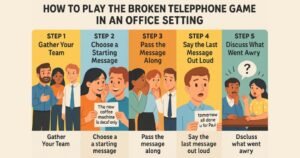
In the Telephone school Game, a short sentence or message is whispered from one student to the next until it reaches the final student, who says it aloud. Then the class may compare the final message with the original message. Teachers can adjust the length and complexity of the message to increase difficulty. This school game naturally introduces the environment of fun while revealing how information changes through imperfect listening.
Cognitive Skills and Research Support
The school game improves the accuracy of acoustic perception and message retention under distraction. Students should become more aware of how small listening errors affect meaning. An NIH study shows that message degradation increases when working memory and attention are overloaded. This activity helps the students to understand the importance of clear listening and focused attention.
5. Story Chain Game (Adjacency Recall)
In this story chain school game, the first student may say one sentence to begin a story. The next student should repeat the sentence in the same way and add a new one. Each student needs to recall all previous information and contribute a new idea. In such a way the story should grow longer and careful listening is required in order to maintain logical continuity of the story.

Cognitive Skills and Research Support
This school game develops memory of verbal sequences and retention of context. Students may remember the details and retain their meaning. The University of Mississippi found that a recall based on narration significantly improves long-term memory encoding.
6. Memory Card Matching (Verbal Variation)
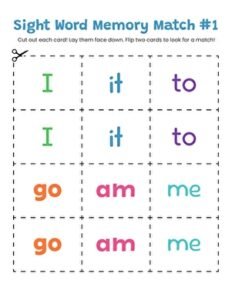
Memory card matching is a school game in which the visual matching version uses spoken content. Cards may comprise the vocabulary word and its definition and date. The teacher reads the cards aloud, and students must remember where the matching pairs are located. This technique removes the reliance on visual cues and strengthens auditory memory.
Cognitive Skills and Research Support
The school game targets verbal paired association with memory, which is important for learning terminology and concepts. A ScienceDirect study indicates that auditory pairing improves conceptual recall when combined with active retrieval. This school game is especially effective for the process of revision and reinforces subject-specific listening comprehension
7. Repeat After Me with Variations
In the ‘repeat after me with variation’ school game, the teacher presents a sentence, a sequence of numbers and a rhythmic pattern that students may repeat exactly. In each round of repetition, the number of sequences increases or becomes more complex. Variations can comprise the pattern of clapping or vocabulary chains. Teachers can easily track the progress by observing how much information students can accurately repeat.

Cognitive Skills and Research Support
This school game strengthens the working of auditory memory and attention span. Students can practise holding information long enough to reproduce it in the right way. An NIH study shows that recall of repetitive auditory tasks significantly improves working capacity in schoolchildren. This skill directly supports listening comprehension, spelling, and mental maths.
Conclusion
Memory and listening skills are nurtured, not innate! The seven school games that were discussed provide a structured way to strengthen your selective attention, improve auditory processing, and improve verbal recall. These games naturally fit into the environment of classroom routines and assist the process of academic learning without adding pressure or complexity.
When teachers regularly incorporate listening and memory games into lessons, students become more focused and develop independent learning skills. Over time, these cognitive improvements lead to better comprehension and higher academic performance across subjects. Students who want additional support can also benefit from the best assignment writing services to reinforce their learning and achieve top results.
Frequently Asked Questions About Best School Games
Which Free Online School Games Are Best for Elementary Students?
The best online school games for elementary students are free with elements of learning but simple and fun to play. There are memory games, word-matching games and even a couple of elementary math activities that help kids build foundational skills without them feeling as if they’re being drilled.
School games with clear instructions and short levels keep the young learners interested. Many teachers approved the sites and provide age-appropriate educational school games that support the process of reading and problem-solving while enabling the students to learn at their own pace.
How do Classroom Games Benefit Students’ Motivation and Focus?
Classroom games increase the motivation of students by making the lessons more enjoyable and interactive than their busy routine. When students take part in school games, they feel more involved and willing to participate. School games promote healthy competition, teamwork, and active listening, which naturally improve focus.
They also break long lessons into short, manageable segments that help the student stay alert. Over time, the regular use of school games builds confidence in students and creates a positive learning environment where students remain engaged.