

Modern organizations face a dynamic digital landscape where the ability to adjust quickly to change can determine success or failure. To remain agile, many have shifted toward hybrid cloud models, blending public and private cloud infrastructures to increase flexibility, scalability, and operational resilience. For businesses exploring this transition, optimizing the deployment of enterprise applications across hybrid environments has become a crucial consideration. A hybrid cloud approach allows organizations to secure sensitive data on-premises while scaling resources in the public cloud and managing costs. As cloud technology evolves, business leaders face new challenges and opportunities, requiring an understanding of these technologies to maximize benefits. Staying informed about top hybrid cloud trends is vital for maintaining a competitive edge and future-proofing IT strategies. Whether optimizing infrastructure, ensuring compliance, or modernizing applications, understanding the latest trends guides investments and migrations. As hybrid environments become standard, tools and strategies mature, offering new capabilities. Enterprises that adopt these changes can streamline operations and drive innovation. Hybrid cloud is now essential for digital transformation, enabling integration of cloud-native services with legacy systems, leveraging distributed data, and improving end-user experience.
Unified Cloud Management Platforms
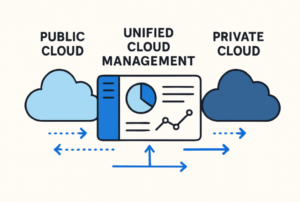
With hybrid environments spanning various clouds and on-premises systems, unified cloud management platforms have become indispensable. These platforms function as a centralized “pane of glass,” simplifying the monitoring, governing, and maintenance of distributed resources. Industry frontrunners such as VMware, IBM, and Microsoft continue to innovate, focusing on integration and abstraction capabilities to reduce manual intervention, enable consistent governance, and improve cost controls.
The addition of artificial intelligence and automation to these management platforms is accelerating. By 2024, IDC projects three out of four enterprises will rely on AI-driven cloud management to dynamically allocate resources and optimize operational workflows. Strategic use of unified management can reduce operational complexity by up to 70%, achieved by automating common tasks, standardizing procedures, and centralizing insights—freeing IT teams to focus on advancing business objectives.
AI and Machine Learning Integration
AI and machine learning now play a transformative role within hybrid cloud environments. Enterprises use these technologies to automate system operation, predict infrastructure needs, and spot vulnerabilities before they become breaches. With the rise of AIOps (Artificial Intelligence for IT Operations), organizations can analyze immense volumes of data, often over a petabyte per day, enabling smarter, faster responses to anomalies and optimization opportunities.
Adopting AIOps can produce tangible business value: a 38% reduction in incident resolution time, alongside a 29% decrease in unexpected downtime, according to industry surveys. These results stem from near-instantaneous processing of monitoring data, predictive maintenance analytics, and automated escalation and remediation workflows.
Enhanced Cybersecurity Protocols
Defending sensitive assets is more complex in a hybrid cloud—security resources must span internal networks and public cloud environments, requiring defenses beyond perimeter-based controls. Zero Trust Network Access (ZTNA) has become the new paradigm, with its principle of continuously validating each user and device, regardless of network location. Adoption has soared, with nearly 80% of enterprises now using some form of ZTNA, up from just 32% in 2020.
ZTNA is often reinforced by Cloud Security Posture Management (CSPM), which continually audits configurations to minimize risk and ensure compliance. Together, these advanced protocols establish stronger controls, especially critical as data sovereignty and regulatory frameworks intensify globally. Organizations that prioritize these security advancements are better equipped to manage risk, respond to regulatory changes, and assure customer trust.
Adoption of Containerization and Microservices
Application modernization is advancing rapidly as containerization and microservice architectures become increasingly prevalent. With platforms like Kubernetes, over 85% of global organizations now deploy containerized workloads in production. Containers facilitate consistent application deployment across various environments while microservices decompose monolithic applications into agile, independently manageable services. Key benefits of this shift include unified, repeatable application deployment pipelines, 2-3 times greater resource utilization than in traditional applications, enhanced portability and reliability, and quicker rollouts. Development cycles are reported to be 66% faster, and deployment times can be reduced by up to 75%. These advancements allow businesses to achieve greater agility and scalability in development, enabling them to swiftly adapt to market changes and seamlessly integrate new technologies.
Emergence of Edge Computing
Hybrid cloud capabilities are rapidly expanding to the network’s edge, bringing computation and analytics closer to where data is generated. This trend is fueled by the proliferation of IoT and latency-sensitive applications such as autonomous vehicles and industrial automation. The edge computing market is expected to exceed $43 billion by 2027, with service providers driving much of this integration to hybrid models.
Latency, once a major challenge in centralized public cloud environments, is sharply reduced, now achievable at 5-10ms, versus 50-100ms for traditional architectures. Use cases include everything from real-time supply chain analytics to immersive augmented reality, as edge deployment unlocks new revenue models and operational efficiencies for digitally ambitious organizations.
Automated Orchestration and Optimization
Orchestration in hybrid cloud environments has evolved into a strategic lever for performance and cost management. Automated orchestration, powered by AI, manages resources across clouds and automates complex workflows, freeing IT staff from routine actions. Recent studies demonstrate that organizations using intelligent orchestration see cloud spend reduction of up to 40%, outpacing traditional manual or threshold-based scaling methods.
Automation supports more predictable and resilient IT operations, while allowing businesses to innovate faster and at lower risk. Enterprises that align orchestration strategies with their overall digital transformation goals are better positioned to capitalize on market opportunities and overcome technology disruption.
As the hybrid cloud landscape matures, businesses equipped with a strong, forward-looking strategy and a willingness to embrace automation, AI, and modern security paradigms will be well-placed not just to survive, but to thrive as technology and markets continue to evolve.
Conclusion
The evolution of hybrid cloud environments highlights the need for advanced management, automation, and security. Unified platforms, AI-driven operations, and cybersecurity underpin efficiency, scalability, and risk reduction. With containerization, microservices, and edge computing, businesses can quickly adapt to market changes and optimize resources. Automation improves agility, cost control, and resilience, helping organizations navigate IT complexities and seize growth opportunities. Embracing these strategies keeps organizations competitive and adaptable in a dynamic digital landscape.