

Commercial vehicles play a vital role in maintaining the backbone of the nation’s transportation infrastructure, moving enormous quantities of goods and thousands of passengers across vast distances every day. These vehicles include semitrucks, delivery vans, buses, and large construction vehicles, and they are essential for commerce, economic growth, and daily life. Unfortunately, due to their significant size, weight, and sometimes hazardous cargo, accidents involving commercial vehicles can have especially devastating consequences for everyone on the road, not just the drivers themselves. Understanding the underlying reasons behind commercial vehicle crashes and adopting evidence-based prevention measures is crucial for transport companies, drivers, and the wider public. For individuals affected by such incidents, seeking help from an experienced semi truck accident attorney can be an important step toward securing accountability and pursuing recovery options in the aftermath of a crash.
By closely examining the most common causes of commercial vehicle accidents, all stakeholders, including regulatory agencies, fleet operators, professional drivers, and policy makers, can prioritize the development and implementation of effective prevention strategies. Taking action requires a collaborative approach that involves regulation enforcement, cutting-edge technology, comprehensive company policies, and individual responsibility. Only through coordinated efforts can we hope to sustain meaningful improvements in road safety for every motorist and pedestrian.
Driver Fatigue
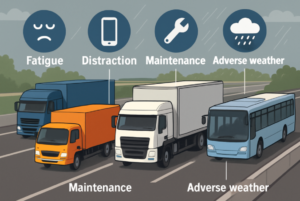
One of the most persistent and dangerous risks in the commercial transportation industry is driver fatigue. Professional drivers often work under demanding schedules, facing long hours behind the wheel that can stretch late into the night or traverse several time zones. This exhaustion impairs alertness, slows reaction times, and erodes judgment—factors that directly contribute to a significant portion of serious commercial vehicle accidents each year. According to the Centers for Disease Control and Prevention (CDC), drowsy driving is responsible for thousands of collisions each year and is completely preventable with the right interventions. To address these dangers, key regulatory measures, such as the Federal Motor Carrier Safety Administration (FMCSA)’s hours-of-service (HOS) rules, mandate scheduled breaks, limits on maximum driving time, and logbook compliance. However, industry experts emphasize that genuine progress relies on both driver awareness of their own limitations and strict company adherence to these regulations. Companies must not pressure drivers to meet unrealistic delivery times at the expense of safety, and drivers themselves must take personal responsibility for getting sufficient rest before hitting the road.
Distracted Driving
Distractions behind the wheel present another significant threat to commercial vehicle safety. Modern drivers contend with a wide range of distractions, including mobile phones, navigation systems, dashboard technology, and even eating meals on the go. Each of these activities can divert a driver’s attention from the road—sometimes with fatal results. The National Highway Traffic Safety Administration (NHTSA) reports that more than 3,000 people lose their lives in crashes caused by distracted driving every year. Fleet operators must address this risk by enforcing strict zero-tolerance policies against texting or using handheld devices while driving and by instituting training programs that emphasize the importance of situational awareness. The increased use of in-cab technology makes it even more crucial for drivers to understand when and how to interact safely with digital tools. Employers can support safer driving by outfitting vehicles with hands-free systems and establishing clear expectations about communication while on the road, reinforcing that no message or call is worth risking a life.
Improper Vehicle Maintenance
Neglecting regular vehicle maintenance is a leading cause of catastrophic mechanical failures, including faulty brakes, worn or underinflated tires, malfunctioning lights, and steering problems. These issues can easily lead to loss of vehicle control, rollovers, or rear-end collisions. The FMCSA requires carriers to perform consistent inspections, document every repair or service performed, and maintain detailed maintenance logs for every vehicle in their fleet. Companies that invest in routine, scheduled maintenance not only protect their assets and driver safety, but also drastically reduce the likelihood of being found in violation of regulations during audits. Proper maintenance minimizes downtime, increases vehicle lifespan, and ultimately creates safer roadways for everyone. Skimping on repairs or skipping inspections might seem like a cost-saving measure in the short term, but it almost always leads to higher expenses and far worse consequences after an accident.
Inadequate Driver Training
With the complexity of today’s commercial vehicles and the dynamic, often hazardous road conditions truck drivers face, robust, continuous driver training is a must. New drivers need more than just the basics to compete on America’s highways. The FMCSA’s Entry-Level Driver Training (ELDT) standards have established a national baseline for qualifications, but ongoing education sets the safest carriers apart. Operators must provide periodic refreshers in defensive driving techniques, emergency maneuvers, handling new safety technology, and understanding the latest regulatory changes. Advanced training equips drivers to handle unexpected situations such as sudden road closures, inclement weather, or breakdowns, and reduces the likelihood of costly mistakes that can harm people and reputations. Investing in education also signals a company’s commitment to professionalism and safety culture, making it easier to attract and retain top talent in a competitive industry.
Improper Cargo Loading
Poorly balanced or improperly secured cargo creates a severe hazard on the road. If a load shifts unexpectedly during transit, it can destabilize even the most technologically advanced vehicles, leading to rollovers, spilled cargo on highways, or complete loss of control. The FMCSA has established clear guidelines on proper cargo loading and securement, including weight distribution, the use of tie-downs, and inspection protocols before every trip. Fleet operators and their employees must not only know these rules but also reinforce them with frequent training and regular compliance checks. Simple lapses—such as failing to double-check a strap or misjudging load distribution—can result in avoidable tragedies. Companies should support drivers with the right equipment and training to make safe loading routine and prioritized at every terminal.
Adverse Weather Conditions
Driving a commercial vehicle in rain, snow, ice, or dense fog requires specialized skills and an added degree of caution. Adverse weather conditions reduce visibility, increase stopping distances, and raise the chance of skidding or multi-vehicle pileups. Fleets can reduce risk by outfitting trucks and buses with weather tracking and real-time telematics systems, which alert drivers to dangerous conditions ahead. Driver training should train operators to adjust speed, following distances, and braking techniques when roads are wet or slick. Managers should encourage proactive route planning according to up-to-date weather data and road closures, empowering their teams to reschedule or reroute if conditions become unsafe. No delivery schedule is more important than human life, and company culture must empower drivers to use their best judgment when facing hazardous weather.
Advanced Safety Technologies
Modern safety technologies are changing the landscape of commercial vehicle operations, offering tools to help prevent accidents and lessen their severity. Systems such as Electronic Stability Control (ESC) reduce the risk of vehicle rollovers by automatically correcting loss of traction or steering. Automatic Emergency Braking (AEB) can sense obstacles or stopped vehicles and activate the brakes without driver input, significantly cutting down reaction time in the event of sudden hazards. Research from Consumer Reports and other leading safety organizations indicates that these types of technology lead to measurable reductions in collision rates and severity. Fleet operators that make strategic investments in advanced safety features demonstrate a strong commitment to protecting their workforce as well as the general public, ultimately saving lives and lowering costs associated with accidents and litigation.
Continuous Commitment to Safety
Building and sustaining a culture of safety requires persistent effort, clear leadership, and active involvement from everyone in the organization. This includes regular safety meetings to discuss new risks, ongoing driver education to reinforce best practices, in-depth incident reviews to identify causes and lessons, and continual investments in vehicle technology upgrades. Companies striving for excellence should stay informed about sector trends, participate in safety advocacy events, and foster partnerships with organizations dedicated to advancing commercial vehicle safety research. The goal is not just compliance with existing regulations but ongoing improvement that makes commercial transport safer for every user of the nation’s roadways.
Conclusion
Commercial vehicle accidents can cause life-altering injuries, fatalities, and significant financial losses for families and businesses alike. By understanding the principal causes—and prioritizing solutions like rigorous compliance with regulations, comprehensive and ongoing education, regular maintenance and inspections, effective cargo management, and the adoption of advanced safety technologies—fleet managers and drivers can take meaningful steps to reduce risk. In the end, a commitment to safety saves lives and creates a more efficient, trustworthy transportation system for all.