

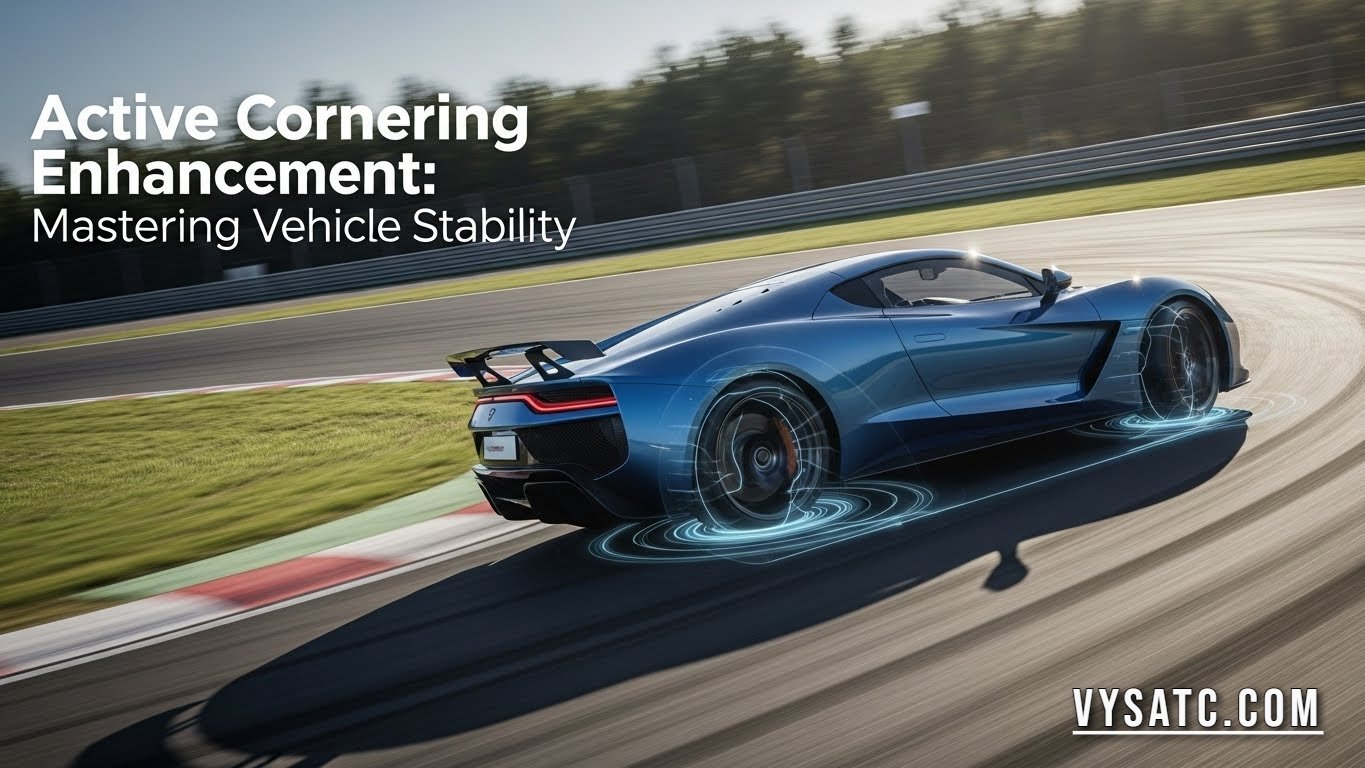
The automotive industry has spent decades perfecting the balance between passenger comfort and vehicle handling. One of the most significant technological leaps in this pursuit is the development of active cornering enhancement systems. Originally popularized by luxury SUV manufacturers to combat the inherent instability of high-center-of-gravity vehicles, this technology has redefined what drivers expect from a modern suspension system.
In this comprehensive guide, we will explore the engineering behind active cornering enhancement, how it functions in real-time environments, and why it remains a crucial feature for both safety and performance in the premium automotive market.
What is Active Cornering Enhancement?
At its core, active cornering enhancement is a computer-controlled suspension system designed to reduce or eliminate body roll during cornering. When a vehicle turns, centrifugal force causes the body to lean toward the outside of the curve. This “body roll” can make a car feel unstable, reduce tire grip, and cause discomfort for passengers.
Unlike a traditional “passive” suspension, which relies on static springs and anti-roll bars, active cornering enhancement uses sensors and hydraulic actuators to actively resist these forces. By applying counter-pressure to the suspension components, the system keeps the vehicle level, ensuring that the tires maintain a flat contact patch with the road surface.
The Evolution of Stability Technology
The history of vehicle stability began with simple mechanical sway bars. These bars connected the left and right wheels to limit leaning. However, mechanical bars represent a compromise: a stiff bar improves cornering but makes the ride harsh on uneven roads.
You Might Also Like: Repmold
The introduction of active cornering enhancement solved this dilemma. By using a “disconnectable” or “adjustable” system, engineers could provide a soft, supple ride when driving in a straight line and a stiff, performance-oriented setup the moment the steering wheel is turned. This dual nature is what makes active cornering enhancement such a revolutionary piece of engineering.
How the System Works: Under the Hood
To understand active cornering enhancement, one must look at the synergy between hardware and software. The system generally consists of four primary components:
1. Electronic Control Unit (ECU)
The ECU is the “brain” of the active cornering enhancement system. It processes data from various sensors at a rate of hundreds of times per second. It determines exactly how much hydraulic pressure is needed to keep the vehicle stable based on speed, steering angle, and lateral G-forces.
2. Lateral Accelerometers
These sensors detect when the vehicle is entering a curve. They measure the side-to-side forces acting on the chassis. The moment an accelerometer detects a shift, it signals the active cornering enhancement system to engage.
3. Hydraulic Pump and Valve Block
The hydraulic pump provides the power necessary to move the suspension components. The valve block then directs this high-pressure fluid to the specific corner of the car that needs support.
4. Active Anti-Roll Actuators
In a vehicle equipped with active cornering enhancement, the traditional solid anti-roll bar is often replaced by a split bar with a hydraulic actuator in the middle. This actuator can twist the bar to apply force, effectively “pushing back” against the lean of the vehicle.
Benefits of Active Cornering Enhancement
Why do manufacturers invest so much in this technology? The advantages of active cornering enhancement extend far beyond just a “sporty” feel.
Enhanced Safety in Emergency Maneuvers
In emergency swerving situations—such as avoiding an obstacle on the highway—a vehicle without active cornering enhancement might experience excessive weight transfer, leading to a loss of control or even a rollover. This system minimizes that risk by keeping the chassis composed and predictable.
Improved Tire Longevity
When a car leans heavily into a corner, the weight is concentrated on the outer edge of the tires. By keeping the car level, active cornering enhancement ensures that the weight is distributed evenly across the tire tread. This results in more uniform wear and a longer lifespan for expensive performance tires.
Superior Passenger Comfort
For passengers, especially those prone to motion sickness, body roll is a major contributor to discomfort. active cornering enhancement provides a “magic carpet” feel, where the cabin remains level even as the driver navigates winding mountain roads.
Real-World Application: SUVs and Off-Roading
While sports cars benefit from this tech, the most dramatic impact of active cornering enhancement is seen in full-sized SUVs. Because these vehicles are tall and heavy, they are naturally prone to swaying.
Interestingly, active cornering enhancement also provides benefits off-road. In a traditional setup, stiff anti-roll bars limit “wheel articulation” (the ability of a wheel to drop into a deep hole while the others remain high). Many active systems can effectively “disconnect” the anti-roll bars when off-roading, allowing for maximum suspension travel and better traction over rocks and uneven terrain.
Maintenance and Longevity of Active Systems
As with any complex mechanical system, active cornering enhancement requires proper care to function correctly over the long term.
- Fluid Checks: The hydraulic fluid used in the system must be kept at the correct level and replaced according to the manufacturer’s schedule. Contaminated fluid can damage the sensitive valve blocks.
- Leak Detection: Because the system operates under high pressure, owners should periodically inspect the actuators and lines for signs of hydraulic leaks.
- Sensor Calibration: If the vehicle’s alignment is adjusted or suspension components are replaced, the active cornering enhancement sensors may need to be recalibrated to ensure the computer knows exactly where “level” is.
Common Myths About Active Suspension
There are several misconceptions regarding active cornering enhancement that often circulate in automotive forums.
Myth 1: It makes the car feel “numb.” Early versions of stability systems were sometimes criticized for being intrusive. However, modern active cornering enhancement is tuned to be transparent. Most drivers will simply notice that the car feels smaller and more agile than it actually is.
Myth 2: It is only for racing. While derived from racing technology, the primary application of active cornering enhancement today is in road safety and luxury. It is just as valuable for a parent driving a family SUV as it is for a track enthusiast.
Myth 3: It replaces the need for good tires. No amount of computer-controlled suspension can overcome the laws of physics if your tires have no grip. active cornering enhancement maximizes the grip you have, but it cannot create traction on bald tires or icy roads.
The Cost of Innovation
It is worth noting that active cornering enhancement is typically found on higher-trim levels or as a standalone luxury option. The cost of the sensors, pumps, and specialized actuators makes it a premium feature. Furthermore, the complexity of the system means that out-of-warranty repairs can be more expensive than those for a standard shock-and-spring setup.
However, for many owners, the combination of improved safety, comfort, and handling makes active cornering enhancement a “must-have” feature when purchasing a new vehicle.
The Future: Electric Vehicles and Beyond
As we move toward a future dominated by Electric Vehicles (EVs), active cornering enhancement is becoming even more important. EVs carry massive battery packs, often weighing over 1,000 pounds, located in the floor of the vehicle. While this gives them a low center of gravity, the sheer mass requires sophisticated management during cornering.
Future iterations of active cornering enhancement will likely be fully electric rather than hydraulic. Electric actuators are faster, more efficient, and easier to integrate into the high-voltage architecture of modern EVs. This shift will allow for even more precise control over vehicle dynamics.
Comparison: Active vs. Adaptive Suspension
It is easy to confuse active cornering enhancement with adaptive suspension.
- Adaptive Suspension: Usually refers to dampers (shocks) that can change their firmness based on road conditions.
- Active Cornering Enhancement: Specifically targets the lateral roll of the vehicle using active force, often through the anti-roll bars or active air springs.
While many luxury cars use both systems in tandem, they serve different purposes. The adaptive dampers handle the “bumpiness” of the road, while the active cornering enhancement handles the “lean” of the car.
Conclusion
The development of active cornering enhancement represents a pinnacle of automotive control. By blending hydraulic power with lightning-fast electronic processing, manufacturers have created vehicles that defy their size and weight.
Whether you are navigating a tight city corner, cruising on a highway, or exploring a rugged off-road trail, active cornering enhancement works silently in the background to ensure your journey is as safe and smooth as possible. As technology continues to evolve, we can expect these systems to become even more capable, further blurring the line between a comfortable luxury cruiser and a high-performance driving machine.